
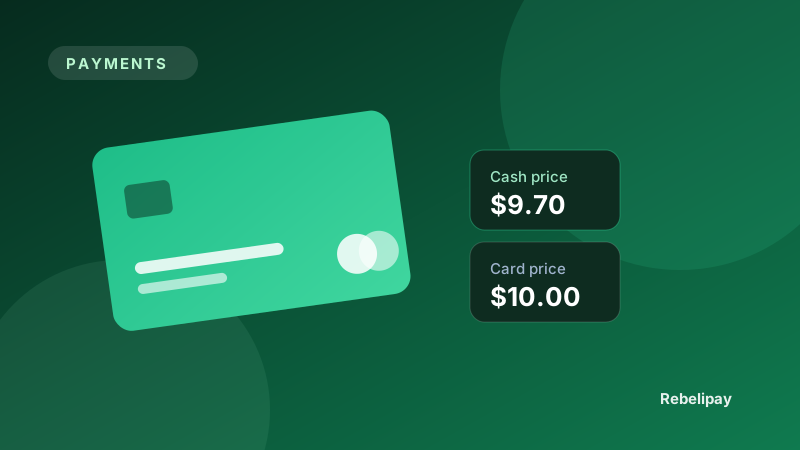
Card processing fees are one of the few costs in retail that quietly grow with every sale you make. The more you sell, the more you pay your processor — often 2–4% of every card transaction. Dual pricing is a simple, increasingly popular way to take that cost off your bottom line. This guide explains what it is, how it works, and what to weigh before offering it.
What is dual pricing?
Dual pricing means you display two prices for an item: a lower cash price and a slightly higher card price. Customers who pay with cash pay the lower amount; customers who pay by card cover the small difference that offsets your processing fee. It's transparent — the two prices are shown up front, so the customer chooses.
The result: the processing cost that used to come straight out of your margin is largely neutralized, while cash-paying customers get a small discount for saving you the fee.
Dual pricing vs. a surcharge
People often confuse the two. A surcharge adds a fee on top at checkout for card payments and is subject to card-network rules and state laws. Dual pricing simply posts both prices from the start — the card price is the "standard" price and cash earns a discount. Because it's framed as a cash discount and disclosed up front, it's generally simpler to implement cleanly. (Always confirm the current rules for your state and card networks.)
Key takeaways
- Dual pricing shows a lower cash price and a slightly higher card price.
- The card price offsets your processing fee, protecting your margin.
- It's transparent — the customer sees both prices and chooses.
- It works best when your POS and payment setup handle it automatically.
Why retailers are adopting it
- Protects margin. On thin-margin categories, 3% back on every card sale is real money.
- Predictable pricing. Your listed (card) price already includes the cost, so fees stop eating into profit.
- Rewards cash. Cash customers get a small, visible discount.
- Transparent. Both prices are posted, so there are no surprises at the register.
What to get right before you start
Done badly, dual pricing confuses customers and staff. Done well, it's seamless. The essentials:
- Automatic pricing at the POS so the register shows the right price for the payment type — no manual math.
- Clear signage so customers understand the cash vs. card price up front.
- Compliance with your state's rules and the card networks' requirements.
- Trained staff who can explain it in one sentence.
How to set it up without the headaches
The difference between a smooth rollout and a messy one is almost always the technology. A payment platform built for dual pricing handles the two-price logic automatically and integrates with your POS, so your team just rings up sales as usual.
That's what Rebelipay is built for — a payment-integration platform that helps merchants cut card processing costs with dual pricing, seamless POS integration, and multiple payment options, so more of every sale stays in your pocket.
Processing fees are one of the few retail costs you can largely design out — if your pricing and payment setup do the work for you.
If lowering your card fees is the goal, dual pricing is one of the most direct levers available. Want the practical checklist? See our guide to lowering credit card processing fees.
Keep reading
Why Accurate Purchase Orders Keep Your Inventory Honest
A purchase order is the record behind your stock counts and margins. Here is how one entry error spreads — and why automating POs keeps your inventory honest.
Read More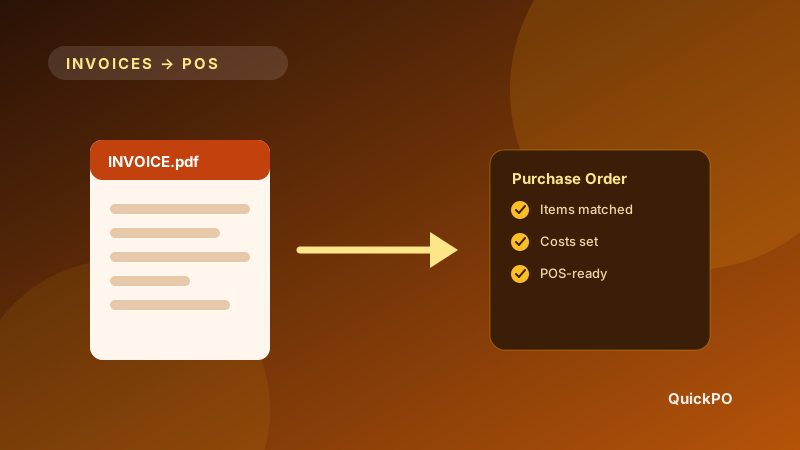
PDF Invoices to POS in Minutes: A Beverage Retailer's Guide
Beverage retailers lose hours retyping vendor invoices. Here is how to turn PDF invoices into POS-ready purchase orders in minutes instead.
Read MoreKeep more of every sale
See how Accrue Retail and Rebelipay help you cut card processing costs — book a quick demo.
Get a Demo